
From the Assembly Line to the Agentic Mesh
Introduction: The Invisible Architecture of Progress
We often think of progress as a series of flashy inventions—the steam engine, the computer, the neural network. But the true driver of human advancement has always been more subtle: Orchestration. An invention is merely a tool; orchestration is the system that makes the tool useful at scale.
As we navigate the “Agentic Revolution” of 2026, we are currently experiencing the third major leap in workflow history. To understand where we are going—and why the “Systems over Tools” philosophy is so critical for today’s C-suite—we must first look back at the three distinct eras of how humans have organized work.
This is the story of how we moved from Manual Muscle to Digital Logic, and finally to Autonomous Agency.
Era 1: The Industrialization of Muscle (1913–1960)
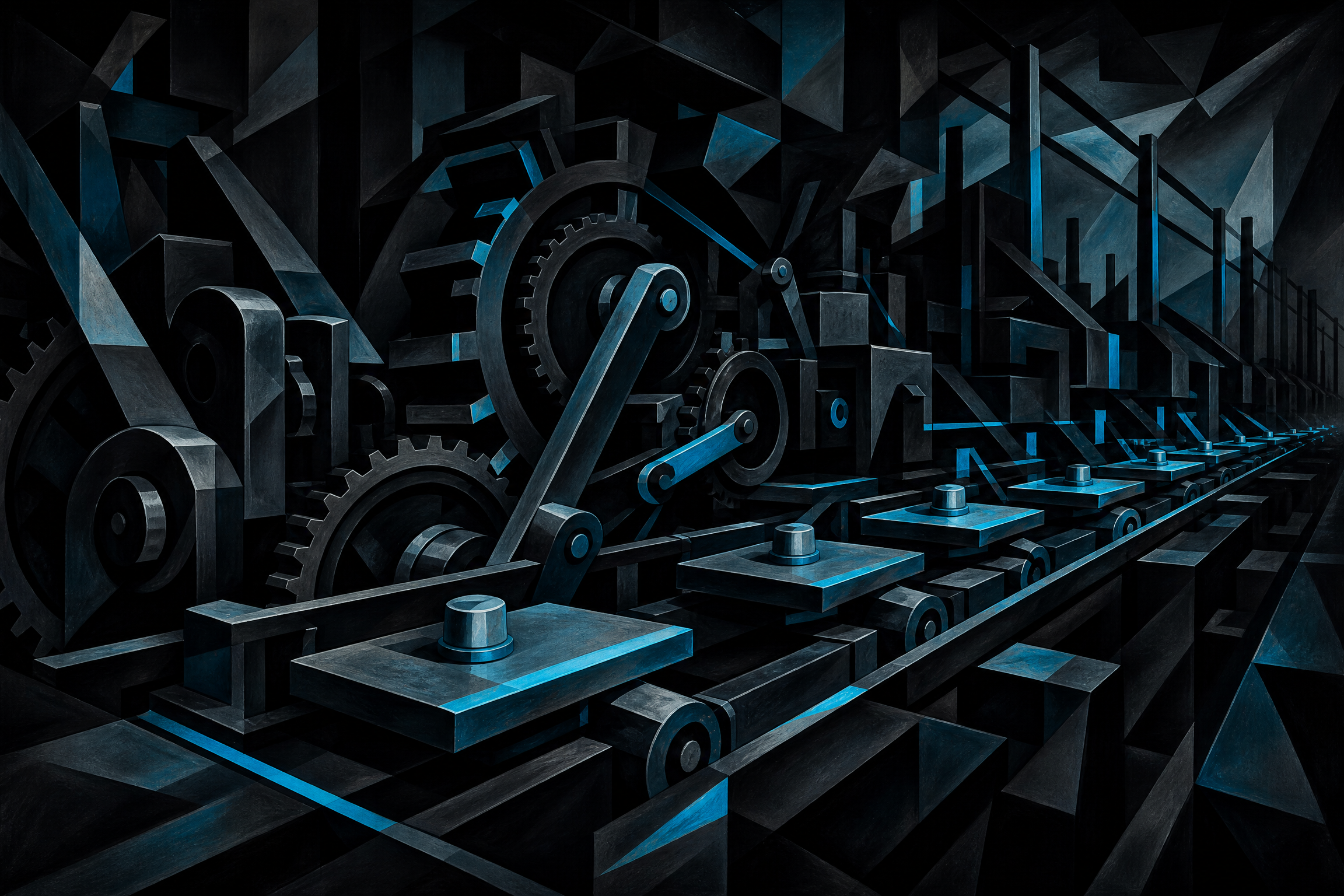
Before the 20th century, work was “Artisan-First.” Every product was a one-off, handcrafted by a single individual who managed the entire process from start to finish. It was slow, inconsistent, and unscalable.
The Henry Ford Breakthrough
The first true “Orchestration Reset” occurred in 1913 with Henry Ford’s moving assembly line. Ford didn’t invent the car; he invented the System for building cars. By decomposing a complex task into narrow, repeatable sub-tasks, he reduced the production time of a Model T from 12 hours to 93 minutes.
The Lessons for 2026:
- Decomposition is King: Just as Ford broke down a car into 84 distinct steps, today’s “Producer’s Edge” comes from breaking down strategic objectives into granular agentic sub-tasks.
- Standardization over Variation: Ford realized that if every part is a “one-off,” the system fails. In the agentic era, we see this in the need for standardized protocols like MCP and A2A.
This era was about the Orchestration of Physical Motion. It created the middle class and defined the 20th-century economy, but it was rigid. If one person failed, the entire line stopped.
Era 2: The Industrialization of Logic (1960–2022)

The second era began with the rise of the mainframe computer and culminated in the “SaaS Explosion” of the 2010s. This era was about the Orchestration of Information.
The Rise of the “System of Record”
During this period, we moved from physical assembly lines to digital workflows. We built ERPs (Enterprise Resource Planning), CRMs (Customer Relationship Management), and project management tools. Work became about “moving data from Point A to Point B.”
The Core Characteristics:
- Deterministic Logic: Workflows followed “If-This-Then-That” (IFTTT) logic. The systems were incredibly reliable but entirely brittle. They couldn’t handle ambiguity or “nuance.”
- The Fragmentation Trap: This era created the “Tool-First” problem we are currently fighting. Executives bought 50 different SaaS tools, each holding a different piece of the truth, creating the “Data Silos” that haunt modern enterprises.
In this era, humans were the “Intelligence Layer” that connected the tools. We were the ones interpreting the data, making the decisions, and manually copying information between systems. We were the “glue” in a fragmented digital world.
Era 3: The Industrialization of Intelligence (2022–Present)

We are now living through the third—and most consequential—era: the Agentic Era. This is the Orchestration of Agency.
The Shift: From “Doing” to “Deciding”
In the previous era, tools were passive. They waited for a human to tell them what to do. In the Agentic Era, the “system” itself has agency. It can research, reason, debug, and execute.
The New Mandate: Systems over Tools
The reason most C-level executives are currently failing with AI is that they are trying to manage Era 3 technology with an Era 2 mindset. They are buying “AI Tools” as if they were just another SaaS subscription.
But an AI agent is not a tool; it is a Digital Employee. And you don’t “use” an employee; you Orchestrate them.
The Anatomy of the 2026 Agentic Mesh:
- The Control Layer: The “Brain” that manages decomposition and routing.
- Autonomous Interoperability: Agents discovering and using each other’s capabilities via protocols like Model Context Protocol (MCP).
- Human-on-the-Loop Governance: The shift from “manual execution” to “strategic oversight.”
Conclusion: The Architecture of the Future

History shows us that the winners are never those who have the “best tools.” The winners are those who build the Best Systems.
- In 1913, it wasn’t the company with the best hammer; it was the company with the Assembly Line.
- In 1995, it wasn’t the company with the best spreadsheet; it was the company with the ERP System.
- In 2026, it isn’t the company with the best LLM; it is the company with the Agentic Control Layer.
We have moved from the industrialization of muscle to the industrialization of logic, and now to the Industrialization of Intelligence. The “Producer’s Edge” belongs to the Owner-Architects—those who stop chasing the next flashy tool and start engineering the autonomous engines of the future.
The history of workflows is a story of increasing leverage through orchestration. The next chapter is yours to write. Will you be a user of tools, or an architect of systems?