
2026 marks the inflection where autonomous agents move from experimental pilot to operational backbone. Markets, regulators, and competitors are converging on one clear lesson: the next leap in enterprise performance will not come from more point tools, but from intelligent orchestration. For C-suite leaders, the imperative is simple yet profound — build systems that coordinate agents, not just acquire agents themselves. This is the Agentic Shift.
The New Reality: Agents Are Infrastructure, Not Features

Over the past 18 months, deployments of specialized autonomous agents accelerated across finance, supply chain, customer operations, and R&D. These agents can act, learn, and transact autonomously. But left untethered, they create fragmentation, latency, and systemic risk. The difference between value and chaos is orchestration — the control plane that governs multi-agent interaction, policy enforcement, workload routing, and emergent behavior.
What “Systems over Tools” Really Means
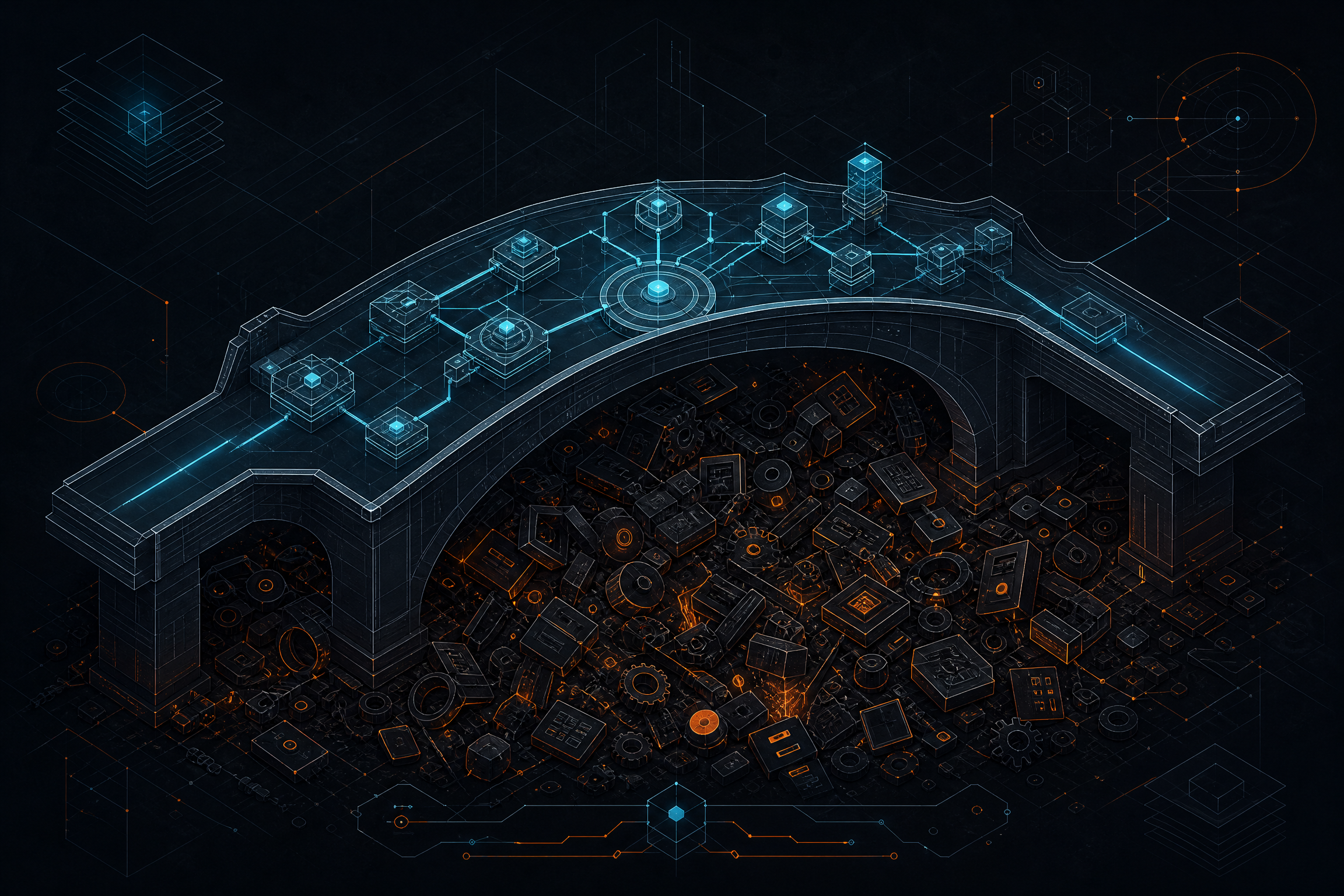
Choosing systems over tools reframes investment from discrete capabilities to an interoperable architecture that scales. Tools are tactical: they execute tasks. Systems are strategic: they enable predictable coordination, observability, and continuous improvement. In an agentic world, systems must provide:
- Orchestration primitives — task scheduling, capability discovery, and fault isolation across agents.
- Policy and governance fabrics — enforceable across agent-to-agent interactions, data flows, and decision thresholds.
- A2A Protocols — standardized interfaces for agent-to-agent negotiation, handoff, and escalation.
- Telemetry and explainability — real-time traces and causal maps for auditing and compliance.
A2A Protocols: The Communication Layer of the Agentic Economy

A2A protocols define how agents exchange intents, capabilities, and outcomes. They are as consequential as TCP/IP was to the internet. Without robust A2A standards, multi-agent workflows break at scale: duplicate work proliferates, deadlocks emerge, and emergent behaviors go unbounded. C-level leaders must mandate A2A design and adoption as part of their architecture roadmap.
- Intent semantics — define shared vocabulary for goals and constraints.
- Capability negotiation — dynamic matching of tasks to agents with SLA awareness.
- Transactional guarantees — atomic handoffs, idempotency, and reconciliation strategies.
- Secure channeling — authenticated, encrypted, and auditable agent communications.
The Producer’s Edge: Reconfiguring Value Creation

The Producer’s Edge is a strategic posture where organizations treat human teams and agents as a unified production layer. Producers — product managers, traders, scientists, creatives — become orchestration designers, assembling agent ensembles to amplify ideas into outcomes. This reconfiguration multiplies velocity, not headcount.
- Composability — enable producers to plug capabilities together through low-friction interfaces.
- Feedback loops — instruments that let producers tune agent behavior with outcome-driven signals.
- Guardrails — policy templates that preserve brand, compliance, and risk thresholds while enabling autonomy.
Enterprises that enable the Producer’s Edge will see innovation velocity increase and time-to-market shrink. The organizational design shifts from centralized command-and-control to federated orchestration with a central control plane.
Structural ROI: Measuring the Right Outcomes

ROI in an agentic architecture is structural, not incremental. Expect value drivers that compound over time:
- Decision velocity — fewer human gating points, faster end-to-end cycles.
- Error and rework reduction — protocol-driven consistency and fewer manual handoffs.
- Resource leverage — reuse of agent capabilities across products and lines of business.
- Risk compression — policy fabrics and observability that reduce exposure and remediation costs.
- Productivity uplift — producers focus on high-value design while agents execute repeatable tasks.
Quantify these effects with three measurements: throughput per producer, mean time to resolution for cross-agent workflows, and variance in compliance incidents. Those KPIs expose the Structural ROI that justifies orchestration investment.
Practical Roadmap for the C-Suite
Download the video transcript (TXT).
Moving from tooling to systems requires executive intent, capital allocation, and cross-functional execution. A concise roadmap:
- Phase 1 — Map the agent topology: Catalog deployed agents, data domains, and decision boundaries. Identify single points of coordination failure.
- Phase 2 — Define A2A standards: Establish intent semantics, negotiation protocols, and transactional guarantees. Prioritize secure, auditable channels.
- Phase 3 — Build the orchestration plane: Deliver a control plane with service discovery, policy enforcement, and lineage telemetry.
- Phase 4 — Enable the Producer’s Edge: Launch composable interfaces and feedback mechanisms for producers to assemble agent workflows safely.
- Phase 5 — Measure Structural ROI: Implement the three core KPIs and iterate investment toward net-positive systemic improvements.
Governance must be baked in from Phase 1. Legal, security, and compliance teams are not optional observers; they are co-authors of the orchestration rules that make autonomy safe and scalable.
Risks and Mitigations
- Emergent misalignment — Mitigate with simulation sandboxes, blue/green rollouts, and policy-as-code.
- Vendor lock-in — Favor open A2A standards and modular orchestration to preserve optionality.
- Regulatory exposure — Embed explainability and audit trails into the control plane from day one.
- Operational complexity — Start with high-value, low-probability workflows and scale governance patterns.
These mitigations are not theoretical. They are operational hygiene: the cost of avoidance is systemic fragility that erodes trust and value.
Conclusion: Orchestration Is the Board-Level Decision
In 2026, the competitive frontier is orchestration. Tools will continue to proliferate, but only systems produce sustained, compounding advantage. C-suite leaders must reallocate resources from tactical tooling toward building an orchestration control plane, formalizing A2A protocols, and empowering the Producer’s Edge. Do this, and you convert autonomous agents from operational risk into a durable strategic multiplier — the Structural ROI that separates leaders from followers in the agentic economy.